Bedroom space is precious, especially in today’s compact living arrangements. A solid wood storage bed does double duty, it’s a comfortable place to sleep and a practical solution for tucking away everything from extra linens to seasonal items. Unlike flimsy bed frames that wobble or particle board bases that sag, a solid wood storage bed offers durability, better weight capacity, and the kind of clean aesthetic that doesn’t feel like furniture is doing you a favor. Whether you’re working with a small bedroom or simply trying to declutter, understanding what makes a solid wood storage bed worth the investment can help you make a smart choice for your home.
Table of Contents
ToggleKey Takeaways
- A solid wood storage bed combines durability and practicality by offering comfortable sleeping surfaces with built-in storage drawers, lasting 15–20 years with proper care versus 5–7 years for particle board alternatives.
- Quality solid wood storage beds support 800–1,000 pounds safely through mortise-and-tenon joinery and kiln-dried wood, while remaining silent and stable without the creaks common to cheaper composite materials.
- Solid wood storage beds maximize bedroom space by eliminating the need for separate dressers or storage units, making them especially valuable in bedrooms under 100 square feet.
- When selecting a solid wood storage bed, prioritize hardwoods like oak and maple, full-extension ball-bearing drawer slides, proper slat spacing (2–3 inches apart), and manufacturer weight capacity statements.
- Maintaining a solid wood storage bed requires keeping humidity between 30–50%, dusting regularly, tightening hardware every six months, and rotating your mattress quarterly to prevent sagging and ensure longevity.
What Is a Solid Wood Storage Bed?
A solid wood storage bed is a bed frame made from genuine wood, typically hardwoods like oak, maple, walnut, or pine, that incorporates drawers or compartments underneath the mattress. Unlike a standard bed frame, the space beneath the sleeping surface is engineered into the design, complete with rails, slats, and sturdy support legs that can handle the added weight of stored items.
The structure typically includes a headboard, footboard, side rails (called stringers in woodworking), and a platform or slat system that supports the mattress while the drawer units are built into the base. Most models feature either pull-out drawers, hydraulic lift-up systems, or open shelving underneath. The depth of storage varies, some models offer shallow drawers designed for flat sheets and blankets, while others feature deeper compartments suitable for larger items or seasonal decor.
What sets solid wood apart is construction method. Real wood frames are assembled with mortise-and-tenon joints, dowels, or heavy-duty hardware that distributes weight evenly. The wood itself is kiln-dried to reduce moisture content, which minimizes warping and cracking over time. A quality solid wood storage bed will last 15–20 years with proper care, far outlasting particle board or veneer alternatives that can degrade within 5–7 years.
Why Choose Solid Wood Over Other Materials
The material you choose affects not just how long your bed lasts but how it handles weight, humidity, and everyday use. Solid wood competes directly with engineered wood, metal frames, and upholstered bases, each with different trade-offs.
Solid wood excels at durability and weight capacity. A properly constructed hardwood bed frame can safely support 800–1,000 pounds, including the mattress and occupants. Metal frames and well-engineered composite beds can match or exceed that capacity, but solid wood offers something metal and particle board don’t: a warm, natural aesthetic that works with almost any bedroom style. Solid wood also resists squeaking and flexing better than cheaper materials. When you sit on the edge or shift during the night, a quality wood frame stays silent and stable, while hollow-core composite beds often develop creaks that worsen over time.
Cost is the trade-off. A solid wood storage bed typically runs $1,200–$3,500 depending on wood species, joinery quality, and drawer construction. An upholstered platform with storage might be $800–$1,500, and a simple metal frame with under-bed bins runs $300–$800. But when you factor in lifespan and the money saved by not replacing it, solid wood often costs less per year of use.
Key Features to Look For
When shopping for a solid wood storage bed, examine these details:
- Wood species and grade: Hardwoods like oak and maple are more durable than softwoods like pine. Check if the frame is solid wood throughout or just the visible parts: particle board interior components are a red flag.
- Joinery method: Look for mortise-and-tenon or dowel joints, not just nails or staples. These joints distribute stress and won’t loosen over time.
- Drawer slides: Full-extension ball-bearing slides are smoother and more durable than friction slides or plastic wheels. They should glide quietly and hold their position.
- Slat support system: Wooden slats spaced 2–3 inches apart are ideal for most mattresses. Fewer or wider-spaced slats can cause sagging and void the mattress warranty.
- Finish: Look for polyurethane or water-based finishes that protect against moisture and stains. Avoid oil-only finishes on beds, as they don’t resist spills or humidity well.
- Weight capacity statement: Reputable manufacturers always publish maximum load ratings. If they don’t, ask before buying.
Benefits of Storage Beds for Your Bedroom
Storage beds solve a real problem: most bedrooms lack sufficient closet or dresser space, forcing homeowners to overcrowd nightstands or resort to under-bed bins that are awkward to access. A solid wood storage bed eliminates that squeeze.
The obvious benefit is reclaimed floor space. Instead of adding a dresser, armoire, or shelving unit elsewhere in the room, storage is built into the bed itself. This is especially valuable in bedrooms under 100 square feet or in homes where every square inch counts. You can now fit a bed, a nightstand, and perhaps a small chair, luxuries that felt impossible before.
Storage beds also encourage organization. Dedicated drawers under the bed motivate people to sort and store items properly instead of letting stuff pile up on the floor or closet shelves. Many owners use the drawers for off-season clothing, extra bedding, blankets, and pillows, items that used to live in hallway closets or under other beds. For guest rooms, storage beds keep spare linens and blankets literally underneath, accessible when needed but completely hidden.
There’s a durability benefit too. Items stored in drawers beneath a solid wood bed are protected from dust, sunlight, and pests compared to open under-bed storage. And because a quality wood frame doesn’t sag, stored items stay undisturbed and unwrinkled.
Finally, aesthetic value shouldn’t be overlooked. A well-made solid wood storage bed is visibly furniture, not a temporary metal frame. It anchors the bedroom and often elevates the entire room’s feel.
How to Select the Right Size and Style
Bed size is straightforward: measure your room and stick to standard dimensions. A Queen (60″ × 80″) is the most popular choice for master bedrooms and couples. A Full (54″ × 75″) works for guest rooms or smaller bedrooms. Twin (38″ × 75″) suits kids’ rooms, and King (76″ × 80″) is for master suites with space to spare. Don’t forget to add 18–24 inches on each side for nightstands and walking room.
Style matters because the bed is often the focal point of the room. A solid wood storage bed can read rustic (with chunky posts and hand-finished edges), modern (with clean lines and minimal hardware), or transitional (blending traditional joinery with contemporary proportions). Look at your existing furniture, if your dresser is sleek and minimal, a bed with heavy carved details will feel out of place. If you prefer farmhouse or cottage style, a lighter wood like reclaimed pine or whitewashed oak works beautifully.
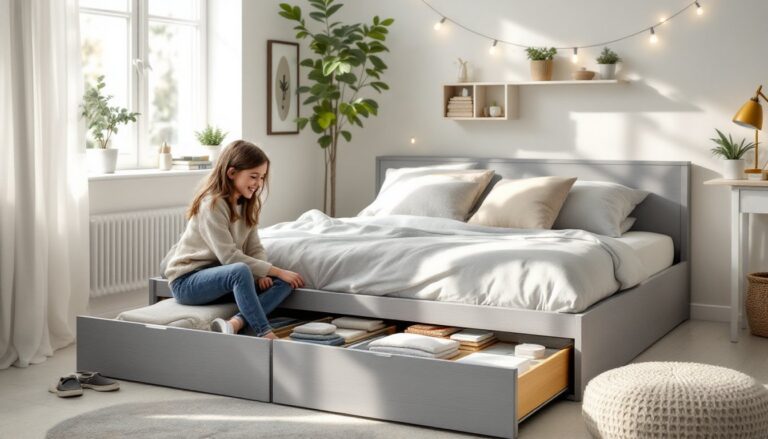
Drawer configuration is a practical choice. Beds with two large drawers underneath offer deep storage for bulky items but are harder to access if placed against a wall. Beds with four smaller drawers (two on each side) distribute weight more evenly and give better access from both sides of the bed. Some models feature one long drawer that slides out perpendicular to the bed, these are excellent space-savers in narrow rooms.
Finish color affects both style and maintenance. Light finishes show dust and spills easily but feel airy. Dark finishes hide dirt but can feel heavy in small spaces. Natural wood stains (like honey, walnut, or espresso) are forgiving and timeless. Consider your room’s lighting and wall color before choosing.
Maintenance and Care Tips for Longevity
A solid wood bed is built to last, but it needs basic care to stay in top shape. Start with the environment: keep humidity between 30–50%. Dry air causes wood to crack: excess humidity encourages warping and mold. If your bedroom is very dry in winter, consider a small humidifier. If it’s damp (especially near coastal areas), run a dehumidifier in summer.
Dust regularly with a soft, dry cloth, microfiber works well. Once or twice a year, use a wood conditioner or furniture polish to keep the finish hydrated and prevent surface cracks. Never use harsh chemical cleaners or excessive water: wipe spills immediately with a barely damp cloth and dry thoroughly. For scratches or scuffs, small touch-up sticks matched to your wood color are inexpensive and effective.
Inspect drawer slides and hardware every six months. Tighten any loose bolts or screws, they work loose naturally with use, and a five-minute tightening session prevents bigger problems. If slides become stiff, apply a silicone-based drawer lubricant (not oil: oil attracts dust).
Rotate your mattress every three months to promote even wear and prevent sagging in one spot. This is especially important with storage beds, which support the mattress from below rather than from a box spring. Beginners often forget this, and the resulting mattress deterioration is a common complaint.
Several resources offer step-by-step guidance on furniture care, The Handyman’s Daughter provides beginner-friendly maintenance tutorials, and Family Handyman covers wood furniture finishing and repair techniques if you need to address damage over time.
Conclusion
A solid wood storage bed is an investment that pays dividends for years. It combines the durability and elegance of real wood with the practical benefit of hidden storage, making it ideal for anyone looking to maximize bedroom space without sacrificing style or function. By choosing quality construction, selecting the right size and finish, and maintaining your bed properly, you’ll have a piece of furniture that serves your home well into the future.