For anyone facing tight bedroom quarters, whether it’s a kid’s room, a guest space, or a studio apartment, a single bed with storage underneath is a no-brainer solution. These hybrid pieces pull double duty: they provide a comfortable sleeping surface while reclaiming wasted floor space below. Instead of cramming a dresser, closet shelving, or storage bins into an already cramped room, that valuable real estate becomes a home for seasonal gear, off-season clothing, books, or bedding. The appeal isn’t just about fitting more stuff: it’s about designing a room that actually works for how people live. This guide walks through the options, how to pick the right bed for your space, and smart ways to organize the storage so you can actually find things when you need them.
Table of Contents
ToggleKey Takeaways
- A single bed with storage underneath maximizes small bedrooms by reclaiming 18–24 inches of floor clearance that would otherwise require a dresser or additional furniture pieces.
- Drawer beds with heavy-duty ball-bearing slides are ideal for frequently accessed items like linens and seasonal clothing, while open cubbies work better for visual organization and accessibility in kids’ rooms.
- Quality construction matters more than aesthetics: solid-wood frames with hardwood joinery outlast particleboard alternatives by years and provide greater weight capacity for safe, long-term use.
- Proper organization using labeled bins, matching containers, and designated zones transforms a single bed with storage into a functional system where you can actually find items when needed.
- Most storage bed assembly requires two people and 4–6 hours, so budget adequate time and help before purchasing pre-made options.
Why Choose a Single Bed With Underneath Storage?
A single bed with built-in storage solves a fundamental space problem without requiring renovation or extra furniture purchases. Most bedrooms in homes built before 2010 weren’t designed with generous floor plans, and even newer construction often skimps on closet space. Adding a nightstand, dresser, and shelving unit quickly eats 40–60 square feet, leaving little room to move around.
Storage beds flip this dynamic. The footprint stays the same as a regular frame, but the usable volume underneath, typically 18–24 inches of clearance, holds the equivalent of a small dresser or multiple under-bed storage boxes. For families working with limited square footage, this reclaimed space means a child’s room can accommodate a desk, a chair, and still feel open. Guest rooms transform from cluttered catch-alls into functional spaces where visitors can actually sit down.
Beyond floor space, there’s the psychology factor: out-of-sight, organized storage reduces visual clutter. A bedroom that looks open and calm promotes better sleep. And unlike standalone storage pieces, a bed-integrated system won’t shift or tip, making it safer for households with kids or pets. The investment in a quality storage bed pays dividends over years of use.
Types of Single Beds With Storage Options
Drawer Beds and Pull-Out Storage
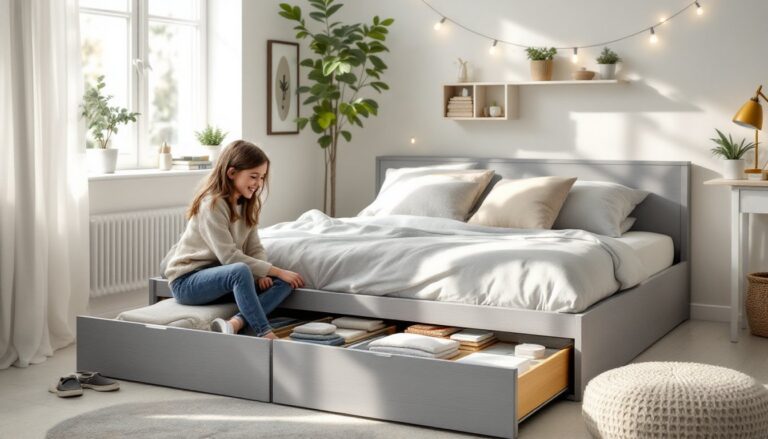
Drawer beds are the most common and practical option. They feature 2–4 full-width or split drawers mounted on ball-bearing slides underneath the frame. The best models use heavy-duty metal glides rated for 100+ pounds per drawer, so they don’t bind or sag over time. When fully extended, drawers should glide smoothly, not wobble or require a second person to haul open.
Drawers are ideal for frequently accessed items: extra linens, pillows, off-season clothing, or school supplies. Because they’re enclosed, contents stay dust-free. The tradeoff is that deeper drawers (24–36 inches) can be hard to reach in the back: if you go this route, label everything and use dividers to keep things orderly.
Pull-out storage takes a similar concept but offers either a solid platform or slatted bed that rolls out partially or fully. These work well if you’re storing larger, bulkier items like bins, suitcases, or sports equipment. They’re easier on the back than leaning down into deep drawers, though they do require some floor clearance to operate safely.
Open Shelving and Cubbies
Open shelving beneath the bed creates cubbies or cubicles, usually divided by vertical or horizontal dividers. Each compartment typically holds a cube-sized bin (12–16 inches per side) or a few stacked boxes. This design is popular in kids’ rooms because it’s visual and accessible, kids can see exactly where things are.
The downside: dust accumulation is real, and visual clutter can undermine the “open room” feeling you’re after. If you go this route, use matching, closed bins or baskets to corral items and maintain a cohesive look. Open shelving works best in rooms where appearance matters less, a craft space, hobby room, or a teen’s bedroom where personality takes priority.
Budget-conscious builders often start with open cubbies and upgrade to drawer slides later. If you’re building a bed yourself, modular open shelving offers flexibility: add or remove dividers as your storage needs change.
How to Choose the Right Storage Bed for Your Space
Start with honest measurements. A single mattress is 38 inches wide and 75 inches long (US standard), but the bed frame itself typically extends another 2–4 inches on each side. Measure your room wall-to-wall and account for swing space: doors, dressers, and walk paths all demand floor clearance. A room that feels cramped with a regular bed won’t magically transform with a storage bed, you’re just moving clutter underneath.
Next, consider what you’ll actually store. Seasonal coats and holiday decorations? Drawers are your friend. School supplies, small toys, and craft materials? Open cubbies with bins work better. Sports gear and suitcases? Look for beds with taller clearance (24–30 inches) and wider compartments.
Material and construction matter more than aesthetics. A solid-wood frame with hardwood joinery (mortise-and-tenon or heavy-duty bolts) outlasts veneered particleboard by years. If budget is tight, resources like Ana White’s free storage daybed plans show you how to build a sturdy captain’s bed with full-depth storage using standard lumber and hardware.
For pre-made options, test the drawer action in person if possible. Ball-bearing slides should glide without noise or binding. Check weight capacity, many storage beds rate between 300–500 pounds total, so verify it matches your mattress, sleeper, and storage load. And don’t skip the assembly: many storage bed kits require at least two people and 4–6 hours: budget time and help accordingly.
Maximizing Storage and Organization
Storage means nothing if you can’t find what you’re looking for. Start by creating zones. Designate one drawer or cubby section for linens, another for out-of-season clothing, a third for hobby supplies. Use a simple label maker or write on bins with a permanent marker, specificity matters. “Winter clothes” is useless: “Winter coats and heavy sweaters, labeled by size” tells you exactly what’s inside.
Invest in matching containers. Mismatched bins look chaotic and take up more mental energy. Clear plastic bins cost $3–8 each and let you see contents at a glance. Fabric cubes ($5–12) look cleaner and compress slightly, fitting more into tight spaces. Whatever you choose, keep a running inventory on your phone or a sticky note on the inside of the bed frame.
For drawer beds specifically, use dividers or small boxes to prevent items from sliding around. Socks and undergarments clump into dead space: drawer dividers solve that. And here’s a pro tip from the organizing crowd: store items you use less frequently at the back and bottom: everyday linens and clothing go in front-facing, easy-reach spots.
If you’re planning to customize an IKEA bed or hack an existing frame, IKEA Hackers is a goldmine for creative modifications, adding casters for mobility, installing wooden dividers, or retrofitting old frames with modern slides. Accessibility is the real win here: a well-organized storage bed means less digging, less frustration, and actually using the space you created.
Finally, audit your storage twice a year (spring and fall). Pull out everything, wipe down the bed interior, and reassess. Did you actually use those old textbooks? Are winter clothes still taking up prime real estate in July? Seasonal rotation keeps things fresh and ensures you’re storing what matters, not just what fits.
Conclusion
A single bed with storage underneath isn’t just a space-saving hack, it’s a practical investment in functionality and sanity. Whether you choose drawer-style storage, open cubbies, or build one yourself using solid construction methods, the key is matching the design to your actual needs and committing to organization habits that make the system work. Done right, you’ll reclaim floor space, reduce visual clutter, and create a bedroom that feels open and calm instead of stuffed. That’s worth the upfront effort.