A full size bed with trundle and storage solves one of the toughest challenges homeowners face: fitting more function into less square footage. Whether you’re furnishing a guest room, a kid’s bedroom, or a studio apartment, this multifunctional piece works triple duty, sleeping space, extra sleeping surface, and hidden storage, without demanding a walk-in closet’s worth of floor space. The beauty lies not just in the space savings, but in the flexibility: a trundle pulls out for sleepovers, drawers stash everything from linens to off-season gear, and the frame itself becomes design-forward furniture rather than a mere bed frame. This guide walks you through why this setup matters, how to pick the right configuration for your room, and what to know before installation.
Table of Contents
ToggleKey Takeaways
- A full size bed with trundle and storage maximizes small spaces by combining sleeping, guest accommodation, and storage into one multifunctional furniture piece.
- Pop-up trundles raise to mattress height for seamless comfort, while pull-out trundles are simpler and more affordable, making the right choice dependent on frequency of use.
- Invest in steel wheels on ball bearings and sturdy hardware for trundles that will see regular use, as cheap plastic wheels fail within months.
- Quality full size beds with trundle should support 600–800 pounds total weight, with solid wood frames lasting decades while particleboard models require careful use.
- Proper installation, floor clearance of 18–24 inches for trundle deployment, and regular maintenance of drawers and wheels keep your bed functional and wobble-free for years.
- Budget models start at $300–$600, but mid-range frames ($600–$1,200) with solid wood and quality slides offer better durability for households with frequent guest or sibling rotations.
Why Choose a Full Size Bed With Trundle and Storage
Space constraints are real, and a full size bed with trundle and storage addresses them head-on. Unlike a standard bed frame, this setup doesn’t force you to sacrifice functionality for floor space. The trundle, a shallow bed platform on wheels that tucks beneath the main frame, stores completely out of sight until needed. That means your room stays open and navigable during the day, then instantly accommodates two sleeping surfaces when guests arrive.
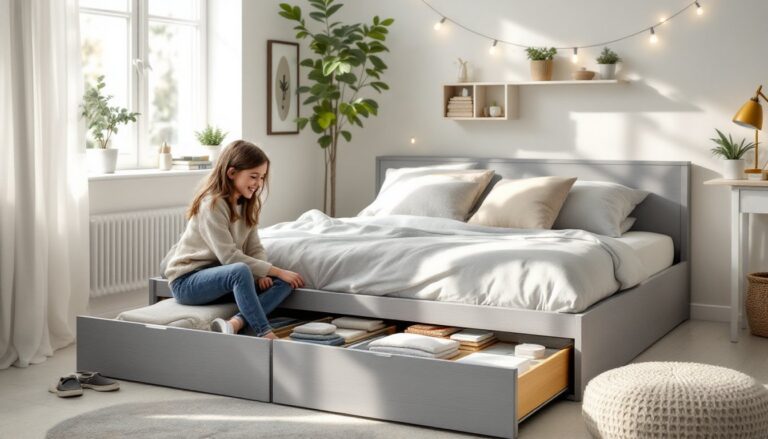
Storage integrated into the frame itself (usually under-bed drawers or shelving) eliminates the need for a separate dresser or storage chest. A typical full bed with under-bed drawers can hold equivalent volume to a standard four-drawer dresser, freeing up another corner of the room. This dual-purpose design is especially valuable in shared kids’ rooms, guest bedrooms, or studio apartments where every square foot counts.
From a practical standpoint, this bed style also simplifies room layout. Instead of arranging a bed, nightstands, and a dresser in an awkward triangle, you’ve consolidated sleeping, sleeping backup, and storage into one footprint. The result feels less cluttered even in small rooms, and the open floor space, whether 50 square feet or 150, stays usable for other furniture, movement, or simply breathing room.
Key Features and Design Options
Trundle Styles and Functionality
Trundles come in two main configurations: pop-up and pull-out. A pop-up trundle features a spring or pneumatic mechanism that raises the secondary mattress to the same height as the main bed when extended, creating a seamless sleeping surface without a gap. This setup works well in guest rooms where comfort and a unified bed aesthetic matter. Drawback: pop-up trundles add weight and complexity to the frame, so assembly and future repairs may demand more care.
A pull-out trundle slides beneath the main bed on wheels and stays lower when extended, typically 10–14 inches below the primary mattress height. It’s simpler mechanically, easier to repair if wheels jam, and lighter overall. The tradeoff is a slight step up or down between surfaces, which guests usually adapt to quickly. Both styles use standard twin mattresses (38″ × 75″ nominal, or 39″ × 76″ actual).
Quality matters here: check wheel material and bearing type. Steel wheels on ball bearings roll smoothly and last years: cheap plastic wheels bind or crack within months. If a trundle will see regular use (weekly guest visits or sibling rotation), invest in sturdy hardware.
Storage Solutions and Configurations
Under-bed drawers are the most common storage option. A typical full bed frame accommodates 2–4 drawers depending on design. Each drawer holds roughly 40–60 pounds without straining the frame or wheels. Organize by category, linens in one, off-season clothes in another, toys or books in a third, and you’ll prevent the “junk drawer” trap.
Some frames feature combination storage: drawers on one side and open shelving or cubbies on the other. Shelves work well for items you want accessible without opening a drawer, like board games, extra pillows, or decorative baskets. Closed drawers, by contrast, hide clutter and keep dust off stored goods.
A few premium models offer side-mounted storage, small shelves or cubbies built into the headboard or footboard. This doesn’t increase footprint but adds functional surface for a lamp, books, or alarm clock. It’s decorative and practical, though it may limit headboard-to-wall clearance if your room is tight.
Material and finish affect both durability and maintenance. Solid wood frames (pine, oak, or birch) last decades and can be refinished. Plywood-core frames cost less upfront but may warp or splinter under heavy use. Check the weight rating, a well-built full bed with trundle should safely support 600–800 pounds total (main mattress plus trundle mattress plus occupants).
How to Choose the Right Model for Your Space
Start with measurements, not aesthetics. A full mattress is 54″ wide and 75″ long. The bed frame itself, with headboard and footboard, typically adds 4–8 inches to both width and length. Your room needs clearance on at least two sides for making the bed, opening drawers, and maneuvering the trundle. Measure the space from wall to wall and from the proposed bed foot to the opposite wall. A trundle adds no extra width but does require 18–24 inches of clearance at the foot or side to pull out smoothly.
Consider who’ll sleep where. If the trundle is for occasional guests, a pull-out model saves money and complexity. If your kids rotate rooms weekly or you host frequent sleepovers, a pop-up trundle justifies the extra cost for comfort and ease of use. Think also about storage needs: a family of three with a small closet will benefit more from 3–4 large drawers than one with multiple closets might.
Height matters too. Standard bed height (top of mattress) is 24–26 inches. For young children or elderly household members, a lower platform, 20–22 inches, eases getting in and out. Conversely, if you’re tall or have mobility issues, extra height (28+ inches with a thick mattress) reduces strain.
Budget across three tiers: budget models ($300–$600) use particleboard and basic wheels: mid-range frames ($600–$1,200) feature solid wood or quality plywood and smooth drawer slides: premium options ($1,200+) offer heirloom-quality wood, designer finishes, and advanced storage. Projects from woodworking experts show that building a custom frame from plans can cost less than mid-range retail while giving you control over materials and finish.
Installation and Setup Tips
Most frames ship flat-pack or partially assembled. Read the manual before opening the box, it’ll tell you whether you need a screwdriver, a wrench, or a power drill, and whether the hardware includes all fasteners or if you’ll need to source wood screws separately.
Layout and prep are critical. Clear the room of obstacles and lay out all components before assembly. Check that wood isn’t warped (sight along edges against a straight line) and that hardware isn’t bent or missing, swapping parts mid-assembly wastes time. If assembling alone, recruit a second person: holding rails square while someone fastens them makes the difference between a frame that’s rock-solid and one that racks (twists when pressure is applied).
While not a typical DIY install, professional assembly services (often offered by furniture retailers for $100–$300) make sense if you lack tools or patience. Assembly typically takes 2–4 hours for a basic frame, longer if storage is complex.
Once assembled, test the trundle on a flat, level floor before placing the mattresses. Roll it in and out a few times to ensure wheels track straight. If wheels bind, check that the frame isn’t twisted, shim under legs as needed to level it. Ensure drawers slide smoothly without catching: if they stick, a light sanding of the drawer sides or a silicone spray on the slides solves most issues.
Blogs like Young House Love document real-world furniture assembly and offer troubleshooting for common snags, wobbling frames, stuck drawers, with photos and straightforward fixes.
Maintenance and Care Guide
Once in place, a quality full bed with trundle requires minimal upkeep if treated thoughtfully. Wood frames benefit from occasional dusting and a light oil or wax finish annually to prevent drying and cracking. Solid wood expands and contracts with humidity, so if your home experiences seasonal shifts (especially in heating season), you might notice slight creaking, it’s normal, harmless, and usually stops within a year as the wood acclimate.
Drawers and wheels demand more attention. Wipe down drawer bottoms and slide surfaces quarterly to prevent dust buildup, which gums up ball-bearing wheels. A furniture slider spray or a thin silicone lubricant keeps them gliding: avoid thick oils or WD-40, which attract dirt. Check that drawer stops (the blocks or clips that prevent drawers from falling out) are secure, a hard slam can dislodge a stop if it wasn’t fastened properly during assembly.
Trundle wheels wear faster than frame hardware because they bear repeated rolling stress. Every 6–12 months, test wheel rotation: they should spin freely. If they’re stiff or squeaky, clean around the axle with a dry cloth and apply a light machine oil (like 3-in-1) to the axle. If wheels are cracked or the axle is bent, they’re replaceable, most hardware stores and online retailers stock replacement furniture casters in standard sizes.
Matress care is standard: rotate every 3 months, use a mattress protector to guard against spills and dust mites, and vacuum with an upholstery brush monthly. For a shared kids’ room or guest setup where the trundle sees regular use, the secondary mattress may compress faster due to lower air circulation. Flip or rotate it as often as the main mattress to extend life.
Resources like The Handyman’s Daughter offer deep dives into furniture repair and refinishing, helpful if you want to restore a wood frame after years of use or customize a finish.