Bedroom space is always tight, especially in homes where square footage comes at a premium. A full-size bed takes up real estate, but it doesn’t have to waste the area beneath or around it. Smart full bed storage solutions let you stash seasonal clothing, extra bedding, shoes, and all the clutter that tends to pile up without sacrificing style or functionality. The right approach turns wasted space into genuine storage that keeps your room organized and your peace of mind intact. Whether you’re working with a modest bedroom or just tired of stepping over boxes, storage-integrated beds and smart solutions make a real difference.
Table of Contents
ToggleKey Takeaways
- Full bed storage solutions transform wasted under-bed space into organized storage for seasonal items, bedding, and clutter without sacrificing style or functionality.
- Platform beds with built-in storage and low-profile rolling containers offer practical full bed storage options ranging from budget-friendly ($150–$250 DIY) to premium ($800–$2,000+ retail models).
- Wall-mounted storage headboards and floating shelves maximize space without consuming floor footprint, making small bedrooms feel larger while providing accessible storage.
- Proper labeling, moisture control with silica packets, and annual maintenance of bolts ensure your full bed storage remains functional and protected long-term.
- DIY under-bed rolling drawers using simple pine boards and drawer slides can be built in a weekend, offering a cost-effective alternative to pre-made storage solutions.
Why Full Bed Storage Matters
Bedrooms in modern homes often pull double duty. You sleep there, but you also dress, work, and sometimes exercise in them. Every square foot counts. A full bed, measuring 54 inches wide by 75 inches long, occupies significant floor space, and the unused void underneath represents lost opportunity. Built-in or under-bed storage keeps things organized and out of sight, which actually makes small rooms feel larger. Beyond aesthetics, accessible storage saves time. Instead of digging through a closet or searching a garage, frequently needed items stay right there, hidden but handy. It’s practical efficiency that compounds over time.
Under-Bed Storage Options
The simplest storage strategy is often the one already built into your frame. Under-bed space, typically 10 to 14 inches of clearance on standard frames, works for low-profile containers, drawers, and rolled items.
Platform Beds with Built-In Storage
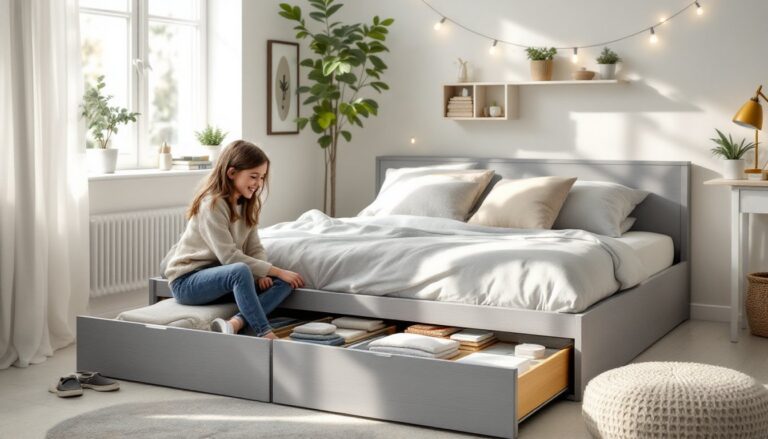
Platform beds eliminate the need for a box spring and add built-in shelving or drawers directly into the frame. They’re sturdy, modern, and available in wood, metal, or upholstered finishes. Many styles feature full-width drawers running the length of the bed or compartments on one or both sides. The advantage is permanence: drawers glide smoothly and don’t require lifting or sliding containers around. The downside is cost, built-in models typically run $800 to $2,000+, depending on materials and finish.
If you already own a frame, under-bed storage containers work well for seasonal rotation. Choose low-profile, rolling models (roughly 5 to 7 inches tall) so bedding can be centered and the room stays balanced. Fabric boxes with handles are lighter than plastic, though plastic seals better against dust. Label everything, and store lighter items like seasonal clothing rather than books, the weight can strain wheels and make pulling cumbersome. Real Simple’s guide to the best full beds with storage underneath compares popular retail options if you’re shopping for a frame upgrade.
Storage Headboards and Wall Solutions
Wall-mounted solutions give you storage without floor footprint. A storage headboard, either a floating shelf unit or one with built-in cubbies and shelves, attaches directly to the wall at 36 to 48 inches above the mattress top, leaving enough clearance for comfortable seating. These range from simple shelving ($200–$500) to custom upholstered units with integrated nightstands and charging stations ($1,200+).
Standard drywall anchors work for light items (books, decorative boxes), but if you’re mounting something heavier, locate and bolt into the wall studs (typically 16 inches on center). Use lag bolts or heavy-duty brackets rated for at least 50 pounds to ensure stability. Floating shelves look cleaner than wall-mounted units and free up space next to the bed.
Wall-hung cabinets are another option, they keep items completely out of sight while providing more storage density than shelves. Measure twice before drilling: once a hole is in the wall, it’s there to stay. A spirit level is non-negotiable here: shelves that slope don’t feel right and will collect things toward one end.
DIY Storage Projects You Can Build
If you’re comfortable with basic carpentry, building storage is cheaper and more customizable than buying. A simple under-bed rolling drawer box uses 1×12 pine boards (nominal: actual dimension is 0.75 inches thick by 11.25 inches wide), plywood for the bottom, drawer slides, and casters.
Materials for one rolling drawer:
- Two 1×12 pine sides, cut to 36 inches (fits under a full bed width)
- Front and back panels from 1×10 pine, cut to 34 inches (accounting for side thickness)
- 3/4-inch plywood bottom, cut to 34 by 36 inches
- One pair full-extension ball-bearing drawer slides (rated for your expected weight)
- Four 2-inch swivel casters with brakes
- Wood screws, wood glue, sandpaper
Tools needed: circular saw or miter saw, drill-driver, measuring tape, square, clamps, and a level.
Basic steps: Cut all boards to length, square them with a speed square, then assemble the box frame using pocket holes (easier and cleaner) or pocket-hole joinery if you own a Kreg jig. Attach the plywood bottom with screws every 6 inches. Mount the drawer slides inside the frame according to the manufacturer’s template, then attach casters to the bottom. Sand the whole thing smooth (220-grit), apply a finish if desired, and slide it under the bed.
Building takes a weekend: cost runs $150–$250 in materials. The Handyman’s Daughter offers beginner woodworking projects and furniture building guides that walk through similar builds with detailed photos.
A headboard shelf unit takes more planning but yields a statement piece. Use 2x10s for the frame, 1×12 boards for shelves, and secure everything to wall studs with lag bolts. Most permits aren’t required for non-structural shelving, but confirm with your local building department if adding significant weight near sleeping areas. Pre-plan your design on graph paper, mark stud locations with a stud finder, and get a helper, holding boards while drilling is easier with two people.
Organizing and Maintaining Your Full Bed Storage
Storage is only useful if you can find things. Label everything with waterproof tape and a marker or a label maker. Use a photo inventory on your phone if you have many containers: snap a picture of the contents and save it with the box number. Rotate seasonal items, winter coats and blankets go deep, summer gear stays accessible.
Keep moisture and pests out. Under-bed containers in humid climates should include silica packets or cedar blocks. Check them every few months and replace if they’re saturated. Avoid storing anything directly on the floor in basements or over concrete: moisture wicks up. A vapor barrier (plastic sheeting) under boxes helps.
Wall-mounted storage needs annual checks. Tighten bolts and lag screws if they’ve loosened. Dust shelves and wipe fronts: water rings and marks get noticeable over time. Young House Love documents budget makeovers and room refreshes that include smart storage strategies you can adapt for your setup. Keep pathways clear around and under the bed, it’s a safety issue and makes cleaning easier. A bedroom that breathes feels larger, even with storage added.
Conclusion
Full bed storage isn’t luxury: it’s practical space management that works in any bedroom. Whether you buy a built-in bed, roll in containers, mount floating shelves, or build custom drawers, the goal is the same: make your bedroom function better. Start with what you have now, measure carefully, and execute one project at a time. Done right, storage becomes invisible, things are just there when you need them, and your room stays calm.