A corner twin bed with storage solves one of the toughest design challenges in tight bedrooms: how to maximize floor space without sacrificing functionality. Whether you’re furnishing a kid’s room, a guest bedroom, or a studio apartment, placing a twin bed in a corner opens up the rest of the room for a desk, dresser, or play area. Add built-in storage underneath or beside the frame, and you’ve got a furniture piece that pulls double duty. This guide covers what makes corner twin beds practical, how to pick the right one for your space, and how to install and optimize storage for maximum benefit.
Table of Contents
ToggleKey Takeaways
- A corner twin bed with storage maximizes floor space in tight bedrooms while providing built-in organization for clothes, toys, and school supplies without requiring a separate dresser or bookcase.
- Corner placement creates a natural nest-like feel and reclaims wall space, making it ideal for awkwardly shaped rooms where traditional center placement wastes corner dead space.
- Choose between drawer systems (best for hidden storage of seasonal items), open shelving (ideal for frequently accessed items), or cubbies (a practical middle ground for flexible organization).
- Proper installation requires securing the headboard to wall studs with L-brackets and 3-inch wood screws—skip this step and you risk safety issues, especially in children’s rooms.
- Strategic organization with drawer dividers, labels, and vacuum storage bags prevents your corner twin bed with storage from becoming cluttered and ensures you get maximum functionality from each compartment.
- A corner twin bed with storage works best when you respect its capacity limits and rotate seasonal items regularly, keeping drawers and shelves functioning smoothly rather than permanently overstuffed.
Why Choose a Corner Twin Bed With Storage
A corner twin bed with storage isn’t just a bed, it’s a strategic furniture investment. Twin beds already take up less floor space than full or queen sizes (typically 39 inches wide by 75 inches long), but tucking one into a corner multiplies that benefit. You reclaim precious wall and floor real estate for other uses.
Storage integrated into the frame or base solves clutter problems without requiring a separate dresser or bookcase. Drawers slide out from under the bed, shelves stack beside it, or cubbies open from the headboard. For kids’ rooms, this means toys, clothes, and school supplies stay organized and contained. Parents appreciate the reduced visual chaos: kids like having a defined place for everything.
Corner placement also creates a natural “nest” feel. Two walls support the bed, leaving an open sight line into the room. This setup works particularly well in awkwardly shaped rooms where a center-placement bed wastes corner dead space. And because the bed is against walls, there’s no risk of anyone rolling out during the night, a genuine comfort for younger sleepers or restless dreamers.
Types of Corner Twin Beds With Storage
Corner twin beds come in several storage configurations, each with different advantages depending on your needs and layout.
Built-In Drawer Systems
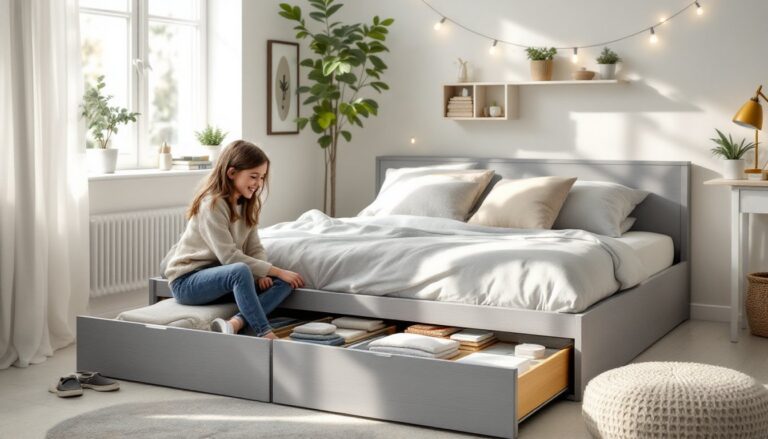
Drawers mounted to the undercarriage or sides of the frame are the most common storage option. Standard underbed drawers (12 to 18 inches tall) roll out on smooth glides and hold seasonal clothing, extra bedding, or toys. Some frames feature drawers on both sides, effectively doubling storage capacity. Metal or wood ball-bearing slides ensure smooth operation even when fully loaded: avoid cheaper plastic slides that wear quickly under regular use.
Built-in drawer systems are popular because they’re hidden from sight, keeping the room visually clean. They work well for items you don’t access daily, winter coats in summer, spare pillows, or archived school projects. The main consideration: check the glide mechanism on first use, and ensure the room has enough floor clearance for drawers to open fully (usually 18 to 24 inches of pull-out depth). A twin corner bed with storage drawers typically costs $300 to $800 depending on materials and finish quality.
Shelving and Open Storage Options
Open shelves built into the headboard or attached to the wall beside the bed create visible storage. Shelves work best for items you use frequently, books, school supplies, a lamp, or decorative items. They’re also more forgiving if you want flexibility: you can add or remove shelves later.
Cubbies (square compartments, usually 12 to 18 inches per side) are a middle ground between drawers and open shelves. They provide containment without doors, and they’re excellent for storing bins, baskets, or rolled blankets. Shelving and cubbies tend to cost slightly less than full drawer systems ($250 to $600), but they require more intentional organization to avoid looking cluttered. Open storage shows dust and items more readily, so if your room gets dusty or you’re dealing with allergies, this matters.
How to Choose the Right Corner Twin Bed for Your Space
Choosing the right corner twin bed starts with honest measurement. Measure your corner from wall to wall, including any trim or baseboards (actual usable space is often an inch or two less than it appears). Measure floor-to-ceiling height as well: if you have low ceilings or a sloped wall, a tall headboard might not fit.
Next, decide on materials. Solid wood frames (pine, oak, or plywood with hardwood veneers) last longer and support heavier loads than particleboard. Metal frames with wood accents offer a modern look and tend to be lighter to move. If the bed will see rough use, kids jumping, siblings climbing, solid construction matters. Particleboard and MDF (medium-density fiberboard) are budget-friendly but don’t tolerate moisture or rough handling as well.
Consider mattress height alongside storage depth. A low-profile mattress (4 to 6 inches) paired with deeper underbed storage works well. A thicker mattress (8+ inches) with shallow drawers might mean some drawers scrape against the mattress. Standard twin mattresses are 5.5 to 6 inches deep when new, plus pillow-top padding.
Storage configuration depends on your layout. If your corner is tight or the room stays messy, deeper drawers containing everything are better than open shelves. If the room is small but organized, open cubbies can make the space feel airier. Also think about accessibility: kids reaching up to high shelves, or older adults bending to access low drawers, need realistic placement.
DIY Installation and Setup Tips
Most corner twin beds arrive as flat-pack kits requiring assembly. Here’s how to install one properly and avoid common pitfalls.
Prep the space. Clear the corner completely and lay down a drop cloth to protect your floor from scratches. Vacuum the corner and ensure walls are straight: old plaster, baseboard gaps, or uneven flooring can cause rocking. Use a level to check both walls at a few heights.
Assemble the frame. Read the instruction manual fully before opening parts. Lay out all hardware and parts on a clean surface. Typically, you’ll attach side rails to the headboard and footboard using bolts, dowels, or pocket holes. Check that corners are square (measure diagonals: they should be equal). Use a power drill with the correct bit type, mixing Phillips and square-drive bolts is a common mistake.
Secure to walls. This is critical for safety, especially with kids. Most frames need L-brackets or wall cleats securing the headboard to wall studs. Locate studs with a stud finder tool: wall anchors alone won’t hold if a child climbs or hangs from the frame. Use 3-inch wood screws or lag bolts rated for your wall type (drywall, plaster, etc.). Check local building codes for bedroom furniture anchoring requirements, some jurisdictions require it for all beds.
Install storage hardware. Drawer glides require accurate spacing (typically 1.5 to 3 inches between the drawer and the bed frame). Install one side fully, slide the drawer in, and install the opposite side. Shelf brackets need proper spacing and studs or wall anchors rated for the load you’re placing on them. A fully loaded shelf can weigh 50+ pounds, so don’t skip this.
Test everything. Open and close drawers several times: they should glide smoothly without binding. Shelves should be level and stable. The entire bed frame should not rock when you push on it. If anything moves, tighten bolts and recheck wall anchors before finalizing placement.
Maximizing Storage Potential
Once your corner twin bed with storage is installed, strategic organization prevents it from becoming a black hole. Start by assigning zones: one drawer for off-season clothing, one for books or school supplies, one for bulkier items like extra pillows or blankets.
Use drawer dividers or small bins to keep items from shifting and to make retrieval easier. Labels on drawers save guesswork, kids especially benefit from knowing exactly where something belongs. Vacuum storage bags compress off-season items dramatically: a twin bed can easily hide winter coats in two or three bags without wasting drawer space on air.
If you have IKEA furniture, many hardware store bins and baskets fit standard shelf widths (10, 15, 20 inches). Matching bins create visual order and slide in and out like drawers. Woven baskets work well for soft items like blankets: solid bins contain small toys and supplies.
For shelving, keep frequently used items at eye level. Books, daily supplies, and favorite decor belong in the middle. Heavier items or rarely accessed stuff go lower: lighter, decorative pieces go higher. This distribution prevents top-heavy instability and makes the space functional, not just decorative.
Rotate seasonal storage. Come spring, pull out lightweight clothes and summer items: pack away winter gear underneath. This rhythm keeps accessible storage actually useful rather than permanently crammed. Aim for a rule: if the drawer or shelf doesn’t close smoothly, something needs to go. A twin corner bed with storage works only if you respect its limits.