If your bedroom feels cramped, a storage bed frame might be the smartest move you can make. Instead of pushing a standard frame against the wall and wondering where to stash seasonal blankets, clothes, or spare pillows, a storage bed frame works double duty, it’s both sleeping furniture and functional closet space. For anyone living in tight quarters or simply tired of clutter, the right storage bed frame transforms how you use your bedroom. This guide breaks down the types available, features that matter most, and how to choose one that actually fits your space and lifestyle.
Table of Contents
ToggleKey Takeaways
- A best bed frame with storage reclaims valuable floor space by tucking storage underneath or integrating shelves into the headboard, making it ideal for small bedrooms and reducing clutter.
- Drawer storage beds with metal ball-bearing slides offer the most accessible organization for frequently used items, while under-bed storage provides flexible, budget-friendly options for long-term stashing.
- Invest in solid hardwood or plywood-with-veneer construction and metal ball-bearing drawer slides; particleboard frames and plastic tracks fail quickly despite lower upfront costs.
- Organize your storage bed by categorizing items into separate drawers, using clear bins, vacuum bags for bulky items, and keeping weight distribution balanced to protect drawer slides.
- A storage bed frame costs less than buying separate dressers and nightstands combined, paying dividends over years of use while eliminating the need for additional furniture pieces.
Why Storage Bed Frames Are Game-Changers for Small Bedrooms
A standard bed frame takes up floor space, period. A storage bed frame reclaims that real estate by tucking storage underneath or integrating shelves into the headboard and footboard. This matters more than it sounds, especially in bedrooms under 100 square feet.
Most people underestimate how much stuff a bedroom actually needs to hide. Seasonal clothing, bedding extras, board games, sports gear, it all piles up. Without integrated storage, you’re either buying a separate dresser, nightstand, and closet organizers, or you’re living with visible clutter. A storage bed pulls everything into one piece of furniture.
Beyond the obvious space-saving benefit, storage bed frames cost less than buying a quality standalone dresser plus nightstands. When budget matters, consolidating furniture makes sense. You’re also less likely to move a bed around later, so investing in the right storage bed upfront pays off for years.
Types of Storage Bed Frames to Consider
Not all storage beds are built the same. Understanding the main types helps you figure out what actually works for your bedroom and how you sleep.
Drawers and Under-Bed Storage Options
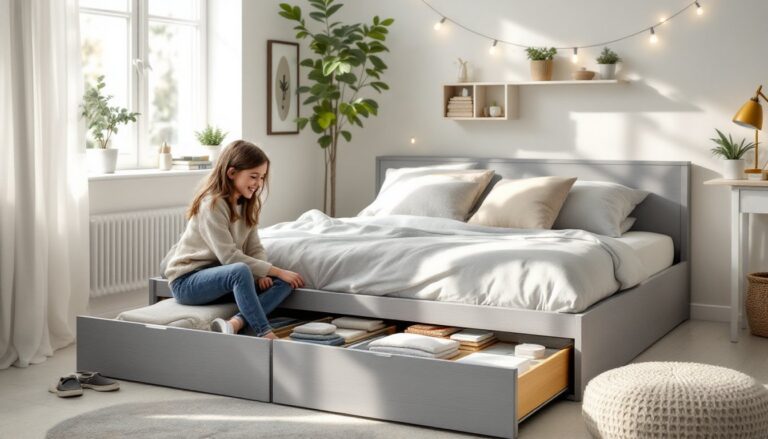
Draw-storage beds feature rolling drawers built into the frame itself, usually beneath the mattress. They’re the most straightforward option. A queen-size bed with two drawers gives you roughly 30 to 40 cubic feet of accessible storage, think four or five large plastic bins worth of capacity. Drawers roll on metal slides (ball-bearing slides last longer and feel smoother than cheaper plastic track options).
Under-bed storage differs subtly: instead of built-in drawers, you get clearance (typically 8 to 12 inches high) to slide your own storage boxes underneath. This is cheaper upfront but requires buying separate containers. The trade-off is flexibility, you can swap out containers easily, but you lose the smooth-gliding drawer experience.
Drawer beds work best if you access items regularly (seasonal clothes, extra bedding). Under-bed storage suits long-term stashing (holiday decorations, archived boxes).
Platform Beds With Built-In Shelving
Platform beds with shelving integrate storage into the headboard, footboard, or side rails. Some designs feature open shelving for books, plants, or décor. Others include enclosed cabinets for concealed storage. A few high-end models combine both, open shelves for display and closed cubbies below.
Platform beds with shelving work well if you want items visible and accessible without bending down to retrieve drawers. They’re also more design-forward: open shelving reads as intentional décor rather than “storage necessity.” Interior design ideas on Homedit showcase how styled open shelving on platform beds can elevate a bedroom’s whole aesthetic.
The downside: shelving requires dusting, and it forces you to keep only items that look good displayed. If your bedroom’s vibe demands a clean, minimalist feel, shelving can feel cluttered fast.
Key Features to Look For When Choosing a Storage Bed Frame
A solid storage bed frame shares certain non-negotiable qualities. Checking these before you buy saves headaches and regrets.
Material and construction matter most. Hardwood frames (solid oak, walnut, or pine) outperform particleboard or veneered plywood, especially around drawer slides and joints. Particleboard frames cost $200 to $400: solid wood frames run $600 to $1,500. The middle ground, plywood with hardwood veneer, balances durability and cost reasonably well.
Drawer slides determine how smoothly storage works. Metal ball-bearing slides glide effortlessly and hold up for decades. Plastic tracks feel cheap and often stick or derail after a couple of years. If the product listing doesn’t specify the slide type, ask the seller or manufacturer, this single detail changes your daily experience.
Weight capacity matters for both the frame and drawers. A typical queen storage bed supports 500 to 800 pounds total. Individual drawers usually handle 50 to 100 pounds each. If you’re storing heavy items (tools, books, textiles), verify the drawer spec. Overloading drawer slides shortens their lifespan or causes them to fail mid-use.
Mattress compatibility is often overlooked. Some storage bed frames work only with specific mattress heights or types. A queen mattress with memory foam runs about 10 to 12 inches tall: a pillow-top might be 14 inches. Make sure your frame’s design accommodates your mattress without awkward gaps or overhang.
Assembly is real work. Most storage beds arrive flat-packed. A two-person job takes 2 to 4 hours for drawer beds and slightly longer for platform designs with shelving. If you’re not mechanically inclined, budget for delivery assembly (usually $100 to $200 extra).
How to Organize and Maximize Your Storage Bed Frame
Once you own a storage bed, the real work is using it effectively. Poor organization defeats the whole purpose.
Start by categorizing what goes inside. Use separate drawers (or bins under a platform bed) for different categories: seasonal clothing in one, off-season bedding in another, spare pillows and throw blankets in a third. This prevents everything from becoming a jumbled pile that’s impossible to find later. Clear plastic bins are your friend, you see what’s inside without opening them.
Invest in drawer dividers and organizers if you’re storing small items. Socks, underwear, and accessories get lost otherwise. Bamboo dividers or cloth organizers cost $10 to $30 but double your ability to find things quickly.
Understand weight distribution. Heavy items belong in lower drawers (boots, winter coats, textbooks). Lighter items go on top shelves or upper drawers. This protects drawer slides from premature wear and makes reaching everyday items easier.
Use vacuum storage bags for bulky items. Seasonal coats, comforters, and blankets compress down significantly in vacuum bags, freeing up drawer space for things you access more often. The Handyman’s Daughter offers beginner-friendly tips for DIY home organization projects that pair well with storage furniture investments.
Label everything. Sounds obvious, but months later you won’t remember which drawer holds the holiday linens. Masking tape and a marker cost nothing and save endless frustration.
Rotate seasonal items twice a year. When seasons change, swap out what’s stored. This keeps your drawers serving current needs rather than collecting dead weight. Small space living ideas on Apartment Therapy include practical seasonal storage swaps for apartments and bedrooms.
Don’t overload. Just because a drawer holds 100 pounds doesn’t mean you should fill it to capacity. Easier sliding and longer-lasting hardware happen when you stay at 60 to 70 percent capacity.
Conclusion
A storage bed frame isn’t a luxury: it’s a practical solution for modern bedroom living. Whether you choose drawer-style or shelving designs, focus on solid construction, quality hardware, and your actual storage needs. Spend the extra upfront on hardwood and ball-bearing slides, then organize thoughtfully. Your future self, the one hunting for winter boots at midnight, will thank you.