In today’s homes, especially apartments and smaller houses, furniture that pulls double or triple duty has become essential. A sleeper sofa with storage hits that sweet spot perfectly. You get a comfortable place to sit during the day, a guest bed when needed, and hidden compartments to stash bedding, pillows, or everyday items. Whether you’re furnishing a studio, outfitting a guest room, or maximizing a living room, a sofa bed with storage offers real functionality without eating up square footage. This guide walks you through the options, shows you what to look for, and explains how to integrate one into your home with style and practicality.
Table of Contents
ToggleKey Takeaways
- A sleeper sofa with storage combines seating, sleeping, and storage into one multifunctional piece, making it ideal for small apartments and rooms where space is a premium.
- Choose between built-in drawer storage for frequent access or under-seat lift-top compartments for maximum capacity and seasonal items storage.
- Before purchasing, measure doorways, hallways, and your room layout—including the bed’s extended position—to ensure the sleeper sofa fits your space and traffic flow.
- Test the mattress mechanism in person (innerspring for durability, foam for occasional guests, or air mattress for minimal space) and read long-term reviews to assess longevity.
- Style your sleeper sofa with neutral fabrics, layered throw pillows, a grounding rug, and proper lighting to make it a polished focal point rather than purely utilitarian.
- Maintain your sleeper sofa with regular lubrication of hinges, cushion rotation, immediate spill cleanup, and periodic vacuuming of storage compartments to ensure years of reliable use.
Why Choose a Sleeper Sofa With Storage?
A storage sofa bed solves the problem that plagues small-space living: furniture that serves only one purpose takes up real estate you can’t afford to waste. When you combine seating, sleeping, and storage into one piece, you’re not just saving floor space, you’re simplifying your layout and cutting down on clutter.
The practical benefits are concrete. Instead of buying a separate sofa, guest bed, and storage ottoman, one piece handles all three functions. A couch bed with storage keeps guest bedding, spare throw pillows, and seasonal items accessible but out of sight. You avoid that awkward scramble when someone’s staying over and you need to find linens buried in a closet upstairs.
There’s also a financial reality: quality furniture costs money, and pieces that earn their keep tend to age well. A storage sofa bed is an investment you’ll use daily, not just when guests visit. That math makes sense for budgets large and small.
Key Features and Storage Options to Consider
Not all sleeper sofas are built the same. Some have minimal storage, while others are designed as clever multi-function workhorses. Understanding your options helps you pick the right one.
Built-In Drawer Storage
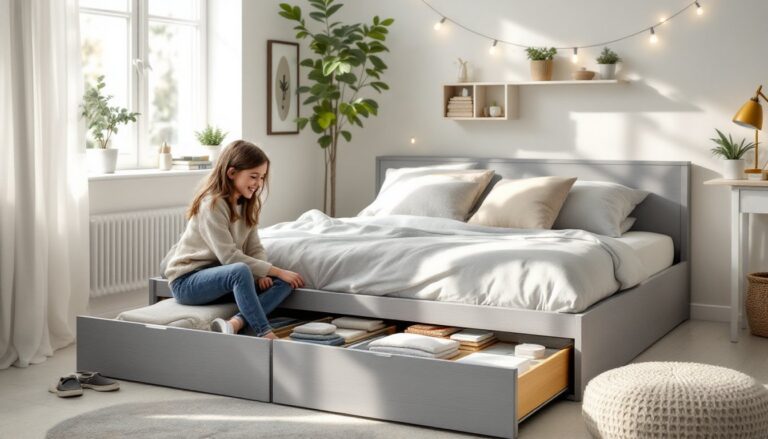
Drawer storage is the most straightforward approach. The base of the sofa contains one or more pull-out drawers, usually mounted on smooth-gliding metal runners, that slide out easily even when the sofa is in sleeping position. Look for drawers with ball-bearing slides (smoother, longer-lasting than plastic ones) and adequate depth and width to hold standard pillows or folded blankets.
Drawers work best for items you access fairly often. They’re easy to reach, visible when open (so you know what’s stored), and won’t trap moisture if you’re storing textiles. A couch bed with storage via drawers typically holds enough for a guest bedroom’s worth of linens plus some extras.
Be honest about drawer capacity when you measure. A drawer that looks deep on the showroom floor might not hold as much as you think once you account for the sofa’s seat cushions and mechanism.
Under-Seat Compartments and Hidden Storage
Some models use the space beneath the seat cushions as a lift-top compartment, you simply raise the cushions to access a large hidden cavity. This works well for seasonal items or things you store once and forget about (holiday decor, out-of-season bedding, extra pillows). The main trade-off is convenience: you can’t grab something from under-seat storage as quickly as you can from a drawer.
Hidden compartments tend to have larger capacity than drawers because they use dead space more efficiently. A sofa bed with storage designed this way often costs slightly more upfront, but if you prioritize bulk storage over frequent access, it’s worth it. Keep in mind that under-seat compartments can be harder to keep dry, moisture and dust accumulate more easily, so avoid storing items sensitive to humidity.
How to Choose the Right Sleeper Sofa With Storage for Your Space
Picking the right model means measuring before you shop and being realistic about how you’ll actually use it.
Measure your doorways and hallways first. A full-size sleeper sofa with storage can be bulky. Standard models run 78 to 96 inches wide, and when delivery arrives, the crew will need to get it into your home without damage. Check not just the width but also ceiling height on stairwells and any tight corners. Most furniture stores offer in-home delivery and setup: confirm their access requirements before ordering.
Know your mattress type. Sleeper sofas typically use one of three mechanisms: innerspring (the most durable and comfortable for frequent use), foam (lighter and easier to deploy, good for occasional guests), or air mattress (space-saving but less comfortable, best for rare use). Since you’re getting storage too, you might lean toward a model with a sturdier mattress because you’ll be using the sleeping function more than you might with a basic sleeper.
Consider your room’s layout. Does the sofa sit against a wall, or do you need clearance for the bed to pull out? Some designs extend farther than others when opened. Measure not just the sofa in sitting position but also in full-bed mode, including leg room for the person sleeping. Interior design experts at Homedit suggest plotting the open bed position on your floor with tape to visualize how it impacts traffic flow.
Factor in storage placement. Do you prefer drawers on one side, a lift-top compartment, or a mix? If you have back-to-wall placement, a drawer on the left or right side might be inaccessible. If the sofa floats in the room, access from all sides matters less. A storage sofa bed that fits your actual usage pattern beats a trendy model that forces awkward compromises.
Test the mechanism yourself if possible. Whether it’s a pull-out bed or a fold-down mattress, it should operate smoothly without pinching or catching. Cheap hinges and springs wear out fast. If shopping online, read reviews from buyers who’ve actually lived with the piece for 6+ months, first impressions don’t tell you about longevity.
Styling and Design Tips for Maximum Impact
A storage sofa bed doesn’t have to look utilitarian. The right styling choices make it a genuine focal point in your room.
Color and fabric matter. Neutral tones (gray, tan, charcoal, cream) are timeless and let you change accent colors with pillows and throws year to year. If you want more personality, a muted jewel tone or warm earth tone can work, just ensure it complements your walls and other major pieces. Consider fabric durability too: if you have kids or pets, performance fabrics with stain resistance are worth the upfront cost. Linen blends and high-performance synthetics hold up better than delicate fabrics.
Layer with textiles strategically. Throw pillows draw the eye and hide the fact that your sofa is a working piece of furniture. Use a mix of sizes and textures, chunky knit pillows mixed with patterned cushions create visual interest. A throw blanket draped over the arm reinforces the comfort factor. These are temporary styling elements, so you can swap them seasonally without the expense of new furniture.
Ground it with a rug. A rug under the sofa anchors the space and defines the seating area. For a sleeper sofa, choose a rug large enough that the front legs sit on it, this makes the setup feel intentional rather than cobbled together. Budget-conscious decorators often find inspiration from Young House Love for affordable ways to make furniture feel designed.
Don’t underestimate lighting. A floor lamp beside the sofa or a pair of table lamps on side tables adds warmth and function. When guests sleep on your sofa bed, they’ll appreciate a lamp or outlet nearby for charging phones and reading. Good lighting also makes the room feel larger and more polished.
Keep the scale balanced. A massive storage sofa in a small room overwhelms the space. A tiny sectional in a large living room gets lost. Measure your room and choose a size that feels proportional. Apartment Therapy offers excellent resources for evaluating furniture scale in different room sizes.
Maintenance and Care for Long-Lasting Performance
A sleeper sofa with storage is a significant investment, and proper care extends its life considerably.
Keep the mechanism clean and lubricated. The hinges, springs, and frame of a sleeper sofa get stressed every time you open and close it. Dust accumulates in joints and mechanisms. Once or twice a year, vacuum under and around the sofa with an upholstery attachment, then inspect for debris in the folding mechanism. If the bed starts to stick or resist opening, apply a silicone-based lubricant (not oil or grease, which attracts dirt) to hinges and joints. A stuck mechanism is often just a dirty one.
Rotate and fluff cushions regularly. Like any sofa, the seat and back cushions compress with use. Rotating them front-to-back and side-to-side every few weeks distributes wear evenly and keeps the surface looking fresh. If cushions are removable, you can also flip them periodically.
Clean spills immediately. The moment something spills, blot (don’t rub) with a clean cloth. Use a mild solution of dish soap and water for most upholstery fabrics. For stains, check the manufacturer’s care tag, it usually specifies safe cleaning methods. Many sleeper sofas come with a fabric care guide: keep it in a drawer for reference.
Vacuum the storage areas before restocking. Every few months, pull out your drawers or lift the top cushions and vacuum the compartments. This prevents dust from settling on stored items (especially important for linens and textiles). If your home tends toward high humidity, consider adding small moisture-absorbing packets inside storage compartments to keep stored fabrics fresh.
Don’t overload drawers. It’s tempting to stuff every cubic inch, but overstuffed drawers stick, warp frames, and wear out the slide mechanism faster. Store only what fits comfortably. A sofa bed with storage is meant to hold guest bedding and a few extras, not your entire textile collection.